
Who Is Gustavo Acosta?
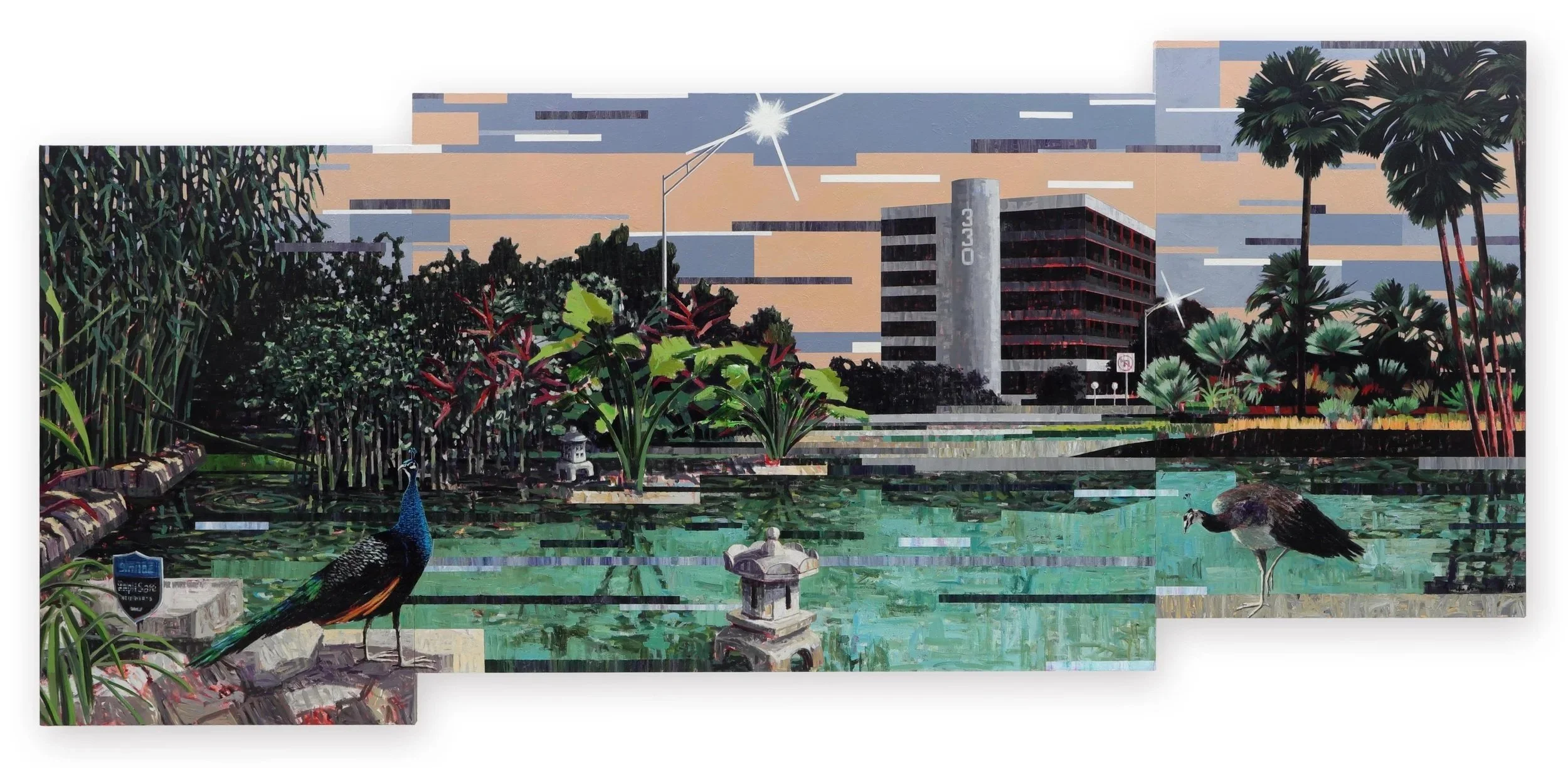
Summer Performance in The Sunshine City | Gustavo Acosta
Gustavo Acosta is a Cuban-born contemporary painter internationally recognized for his luminous architectural landscapes and meditative explorations of the modern city. Best known for paintings that transform buildings, streets, and skylines into quiet reflections on time, memory, and civilization, Acosta has developed one of the most distinctive architectural voices in contemporary Latin American art.
Born in Havana, Cuba, in 1958, Acosta studied at the renowned San Alejandro Academy of Fine Arts before earning his degree from the Instituto Superior de Arte (ISA) in Havana in 1982. He emerged as part of the influential generation of Cuban artists during the 1980s whose work expanded beyond traditional academic painting while engaging with the social and cultural realities of contemporary life. After leaving Cuba in the early 1990s, he lived in Mexico and Spain before settling permanently in Miami in 1994, where he continues to live and work.
Although Acosta is often described as a painter of cities, his work is not documentary in nature. Instead, architecture becomes a visual language through which he explores broader questions about history, power, memory, and the human condition. Office towers, apartment buildings, monuments, and quiet streets appear meticulously rendered yet strangely uninhabited, creating spaces that feel simultaneously familiar and suspended outside of time. The absence of people encourages viewers to inhabit these environments themselves, bringing their own experiences and associations to the work.
Light and geometry play a central role in Acosta's paintings. Crisp architectural forms are often interrupted by broad passages of shadow or fields of atmospheric color that obscure, reveal, and transform the urban landscape. Rather than depicting a specific moment or location with literal accuracy, Acosta creates psychological and emotional spaces where memory, observation, and imagination converge. His paintings suggest that cities are more than collections of buildings; they are repositories of aspiration, conflict, loss, and cultural identity that continue to evolve long after the events that shaped them have passed.
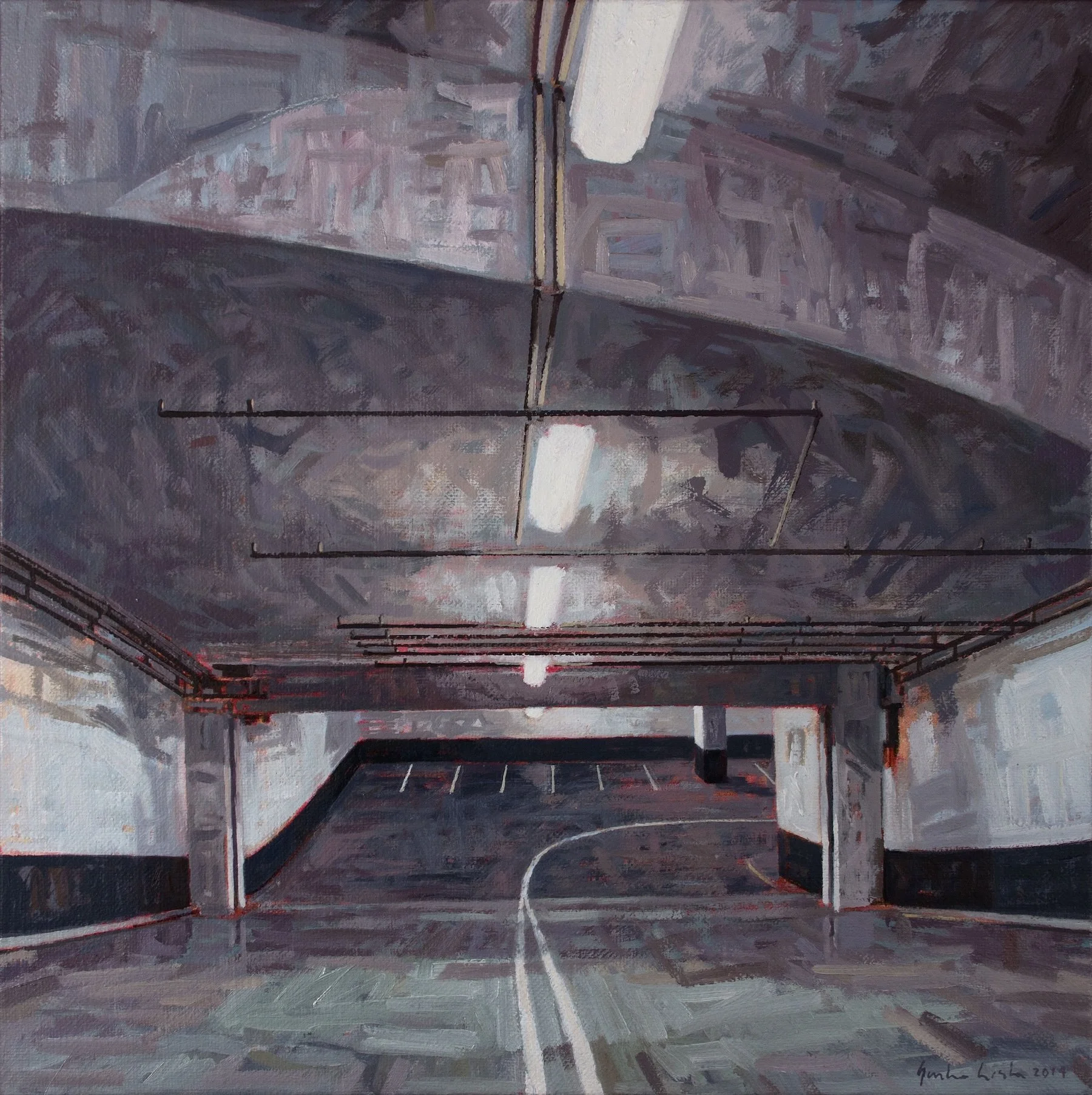
Euforia | Gustavo Acosta
Over a career spanning more than four decades, Acosta has exhibited extensively throughout the United States, Latin America, and Europe. His work has been featured in major museums, biennials, and cultural institutions including the São Paulo Biennial, the Havana Biennial, the Cuenca Biennial, El Museo del Barrio in New York, the Museum of Contemporary Art (MOCA) in Miami, the National Museum of Fine Arts in Havana, and the Caixa Cultural museums in Rio de Janeiro and São Paulo.
His paintings are held in numerous public and private collections, including the National Museum of Fine Arts in Havana, the Wifredo Lam Center, El Museo del Barrio, the Frost Art Museum, the Lowe Art Museum, the University of Southern California's Fisher Museum of Art, the Museum of Contemporary Art (MOCA), Miami, and the Jorge M. Pérez Collection, among others. Acosta has also received significant international recognition through awards at the Havana Biennial, the Cuenca Biennial, and the Caribbean Biennial.
Today, Gustavo Acosta is regarded as one of the leading painters of his generation to emerge from Cuba. His work transcends geography, inviting viewers to reconsider the built environments they move through every day. Whether depicting Havana, Miami, New York, or an imagined city assembled from memory and observation, Acosta reminds us that architecture is never merely physical. It reflects the ambitions, contradictions, and enduring traces of the societies that create it.