
Who Is Ciro Quintana?
For more than four decades, Ciro Quintana has built a body of work that is playful, intellectually layered, and unmistakably his own. Drawing equally from comic books, Renaissance painting, Hollywood cinema, mythology, Cuban history, and contemporary popular culture, Quintana creates paintings that reward both immediate enjoyment and careful looking.
A leading figure of Cuba's influential generation of artists that emerged during the 1980s, Quintana has consistently used humor, parody, and visual storytelling to examine larger questions about art, culture, politics, and the ways images shape our understanding of the world.
Today, living and working in Miami, he continues to produce ambitious paintings that blend technical skill with conceptual depth, inviting viewers into narratives where history, fiction, and satire comfortably coexist.
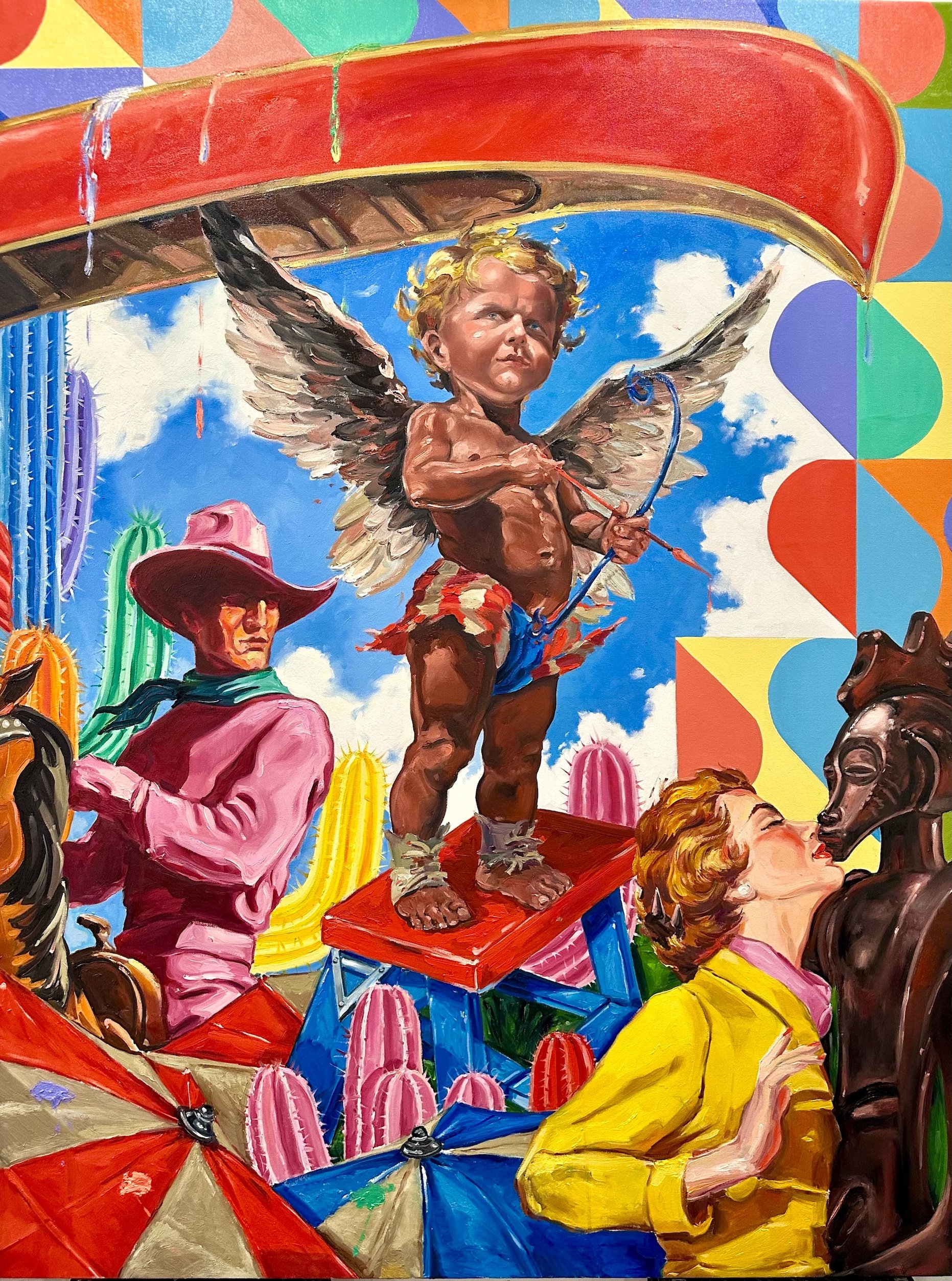
Love is Real, Real is Love | Ciro Quintana
From Havana to Miami
Born in Havana in either 1964 or 1965 (published sources vary), Quintana studied at Cuba's most prestigious art schools, including the Escuela Nacional de Bellas Artes San Alejandro and the Instituto Superior de Arte (ISA). These institutions produced many of the artists who transformed contemporary Cuban art during the final decades of the twentieth century.
While still a student at ISA, Quintana became a founding member of the influential Puré Group, an experimental collective whose exhibitions challenged artistic conventions by mixing painting, installation, popular culture, kitsch, and conceptual strategies. Although the group existed for only a short period, its impact on Cuban contemporary art was profound and helped redefine what a new generation of artists believed art could be.
Those formative years established concerns that continue to shape Quintana's work today: the relationship between high and low culture, the construction of identity through images, and the power of visual language to question accepted narratives.
Painting About Images
Quintana often describes his paintings as systems where many visual languages collide.
Comic strips, advertising, classical painting, mythology, pulp fiction, cinema, religious symbolism, American superheroes, and Cuban cultural references all appear together, not as random quotations, but as carefully orchestrated elements within a larger narrative.
Rather than separating fine art from popular culture, Quintana allows them to occupy the same space. A Renaissance composition may coexist with a comic-book hero. A classical allegory may unfold beside a familiar commercial icon. Humor often serves as the invitation, while more complex ideas reveal themselves over time.
His paintings are filled with visual clues that encourage viewers to participate in decoding the work rather than simply observing it.
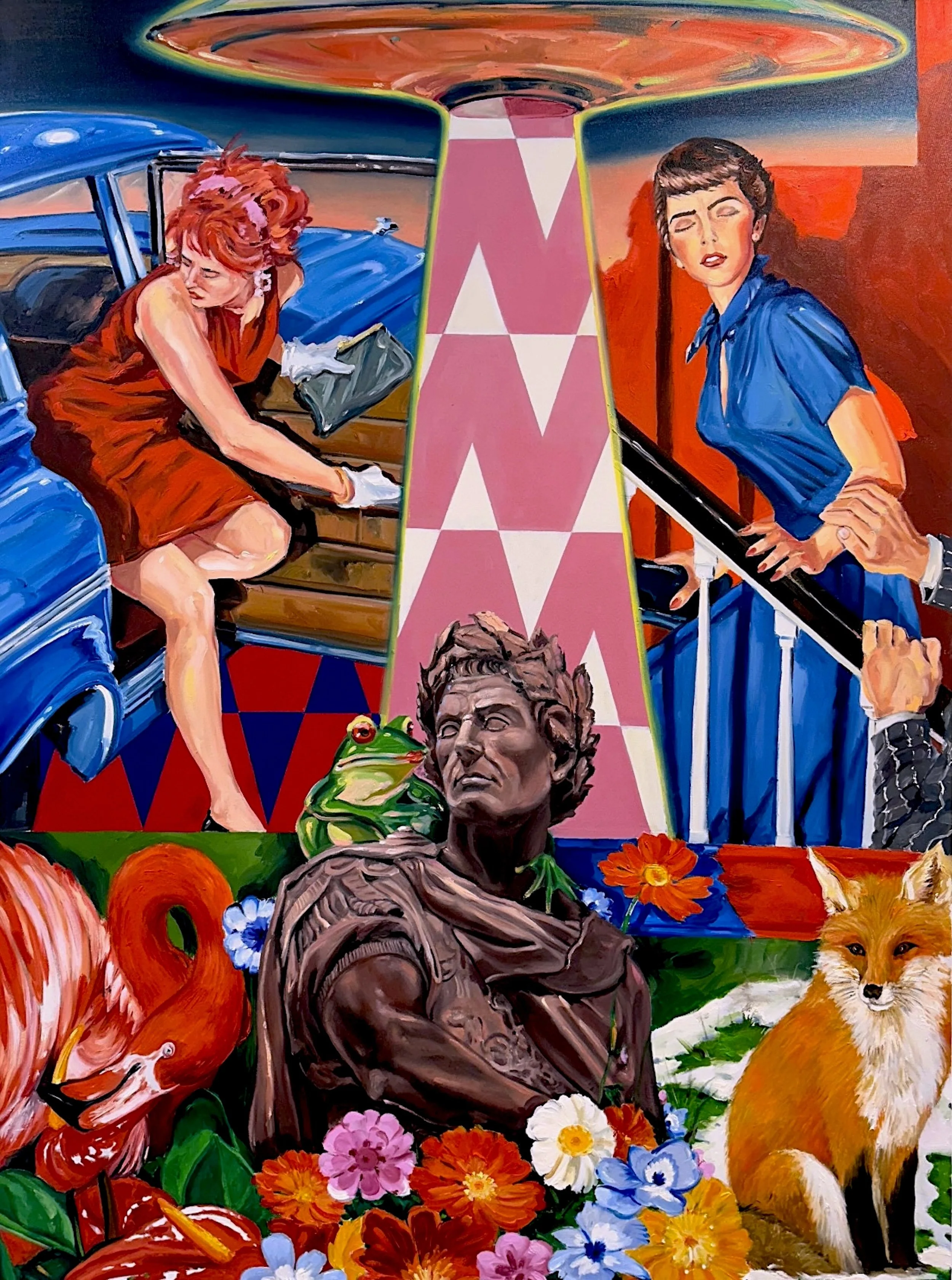
Fairy Tales From The American Dream | Ciro Quintana
The Language of Pop
Although Quintana's work is frequently associated with Pop Art, it differs from the movement's classic American examples.
Rather than celebrating consumer culture, his paintings use the visual vocabulary of popular media as a way to explore history, politics, artistic tradition, and contemporary life. Familiar imagery becomes a language through which larger cultural conversations unfold.
This ability to balance accessibility with sophistication is one of the defining qualities of his work. The paintings are colorful, theatrical, and immediately engaging, yet beneath their surface lies an intricate network of references that rewards repeated viewing.
Collectors often discover something new each time they return to the work.
Chronicles of a Cuban Artist
Among Quintana's most recognized ongoing bodies of work is Chronicles of a Cuban Artist, a series that examines both Cuban culture and the international art world through satire, allegory, and visual storytelling.
The series draws upon an expansive range of references, from Greco-Roman mythology and Flemish painting to American comics and enduring symbols of Cuban identity. The result is a body of work that is simultaneously personal, historical, and universal, examining the artist's role within a constantly evolving cultural landscape.
International Recognition
Over the course of his career, Quintana's work has been exhibited throughout the United States, Europe, Latin America, and the Caribbean.
His paintings are represented in numerous public and museum collections, including the Ludwig Forum für Internationale Kunst in Germany, the National Museum of Fine Arts in Havana, the Lowe Art Museum in Miami, NSU Art Museum Fort Lauderdale, the Pori Art Museum in Finland, the Museum of Modern Art in Santo Domingo, and the Cisneros Fontanals Art Foundation (CIFO), among others.
These institutional holdings reflect both the historical importance of Quintana's contribution to contemporary Cuban art and the continued relevance of his work internationally.
Why Ciro Quintana Matters
Ciro Quintana belongs to a generation of artists who expanded the possibilities of contemporary Cuban art by refusing to recognize traditional boundaries between serious art and popular culture.
His paintings are witty without being superficial, technically accomplished without becoming academic, and intellectually ambitious without sacrificing visual pleasure.
At first glance they entertain. Over time they reveal increasingly rich conversations about history, culture, art itself, and the stories societies choose to tell.
That combination of craftsmanship, humor, and conceptual sophistication continues to make Quintana one of the most distinctive voices in contemporary Latin American art.