
Who is Noah Saterstrom?
History is often written through great events.
Families remember something different.
A photograph tucked into a drawer. A name spoken less often over time. A story interrupted by silence. A face that survives even after the reasons for remembering it have been forgotten.
For American painter Noah Saterstrom, these fragments are not simply records of the past. They are invitations to look more closely.
Through portraiture, family archives, historical research, and narrative painting, Saterstrom creates works that recover lives, preserve memory, and give visual form to stories that might otherwise disappear. His paintings explore not only who we were, but how memory shapes identity across generations.
Born in Natchez, Mississippi, Saterstrom has become one of the South's most thoughtful contemporary painters, creating work that bridges portraiture, history, genealogy, and cultural memory. His paintings invite viewers to consider how personal stories become part of our shared human history.
Painting Against Forgetting
Memory lies at the heart of Noah Saterstrom's work.
Many of his paintings begin with old family photographs, archival documents, handwritten notes, or stories passed from one generation to the next. Rather than treating these materials as historical artifacts, Saterstrom transforms them into living works of art that reconnect the past with the present.
His paintings do not attempt to recreate history exactly as it happened.
Instead, they acknowledge that memory is layered, incomplete, and deeply human. Every family preserves certain stories while allowing others to fade. Saterstrom's work asks what happens when artists choose to recover those forgotten lives.
In doing so, he transforms painting into an act of remembrance.
The Stories Families Carry
Among Saterstrom's most significant bodies of work is What Became of Dr. Smith, an ambitious project inspired by the disappearance of his great-grandfather from family history.
As research unfolded, forgotten photographs, institutional records, letters, and personal documents revealed a far more complicated story than anyone had imagined. Rather than presenting the findings as biography alone, Saterstrom translated decades of research into a deeply personal series of paintings exploring mental illness, family silence, loss, resilience, and compassion. The project culminated in a major exhibition at the Mississippi Museum of Art, demonstrating how personal history can illuminate broader questions about memory and identity.
The work reminds us that history is often preserved not only in books, but within families themselves.
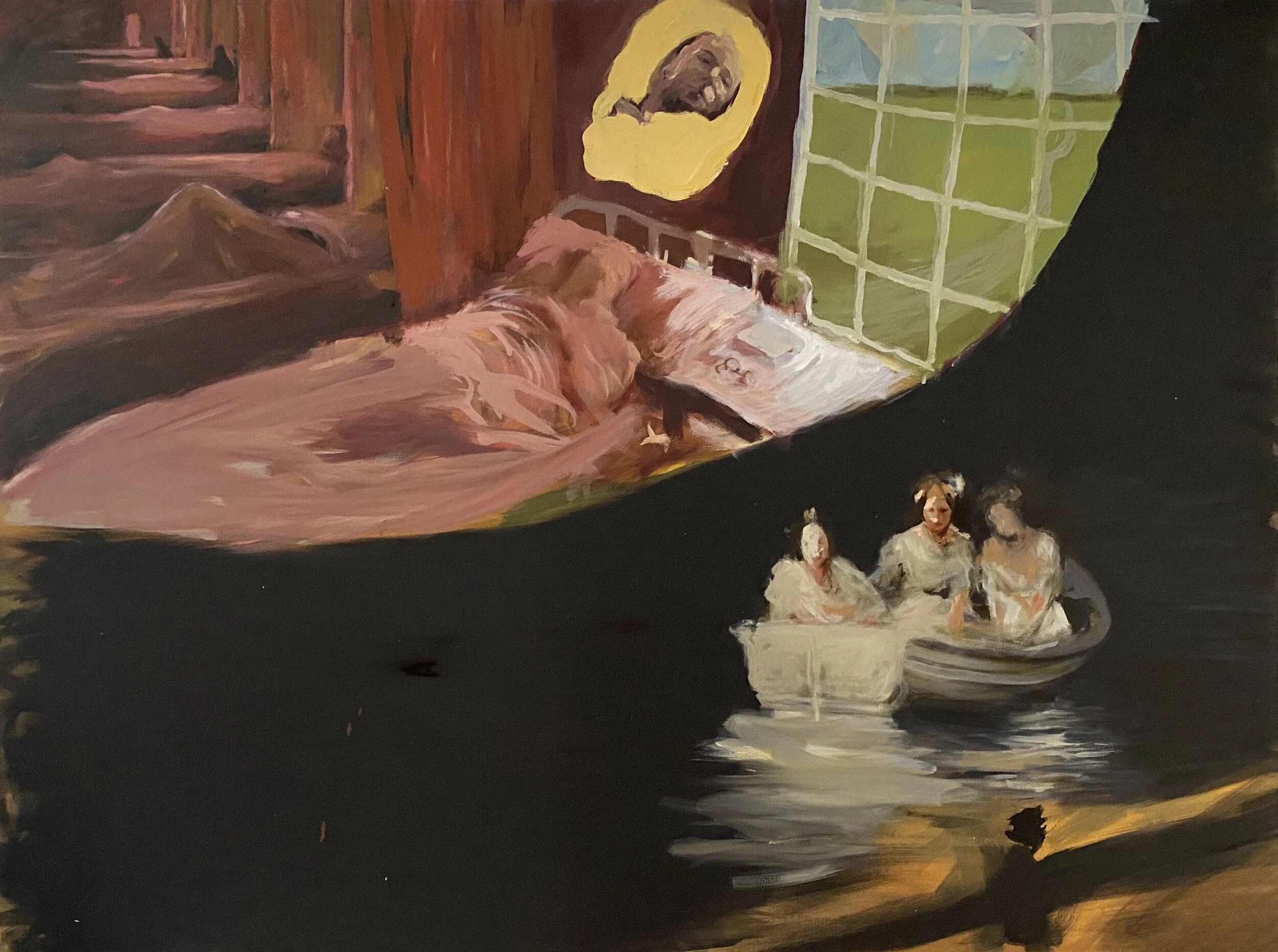
Dr. Smith and The Unknown Sense, Old Asylum, Jackson, Mississippi, 1925 | Noah Saterstrom
Portraiture as Storytelling
Portraiture occupies an important place throughout Saterstrom's career.
Whether painting artists, musicians, writers, or members of his own family, he approaches each subject with the understanding that every face carries a story extending beyond physical likeness.
His portraits balance observation with empathy.
Rather than seeking idealization, Saterstrom is interested in presence: the subtle expressions, gestures, and quiet moments that reveal something essential about the individual before him.
In this way, portraiture becomes another form of historical record, preserving not simply appearances, but human experience itself.
The Southern Experience
Although deeply rooted in Mississippi, Saterstrom's work resists romantic ideas of the American South.
His paintings acknowledge beauty while remaining attentive to the complexities of history, family, memory, and place. They recognize that Southern identity, like all identities, is shaped by stories both remembered and forgotten.
This nuanced perspective allows his work to speak far beyond its regional origins.
The questions his paintings ask are universal.
How do families remember?
What is lost when stories disappear?
What responsibilities do we have to those who came before us?
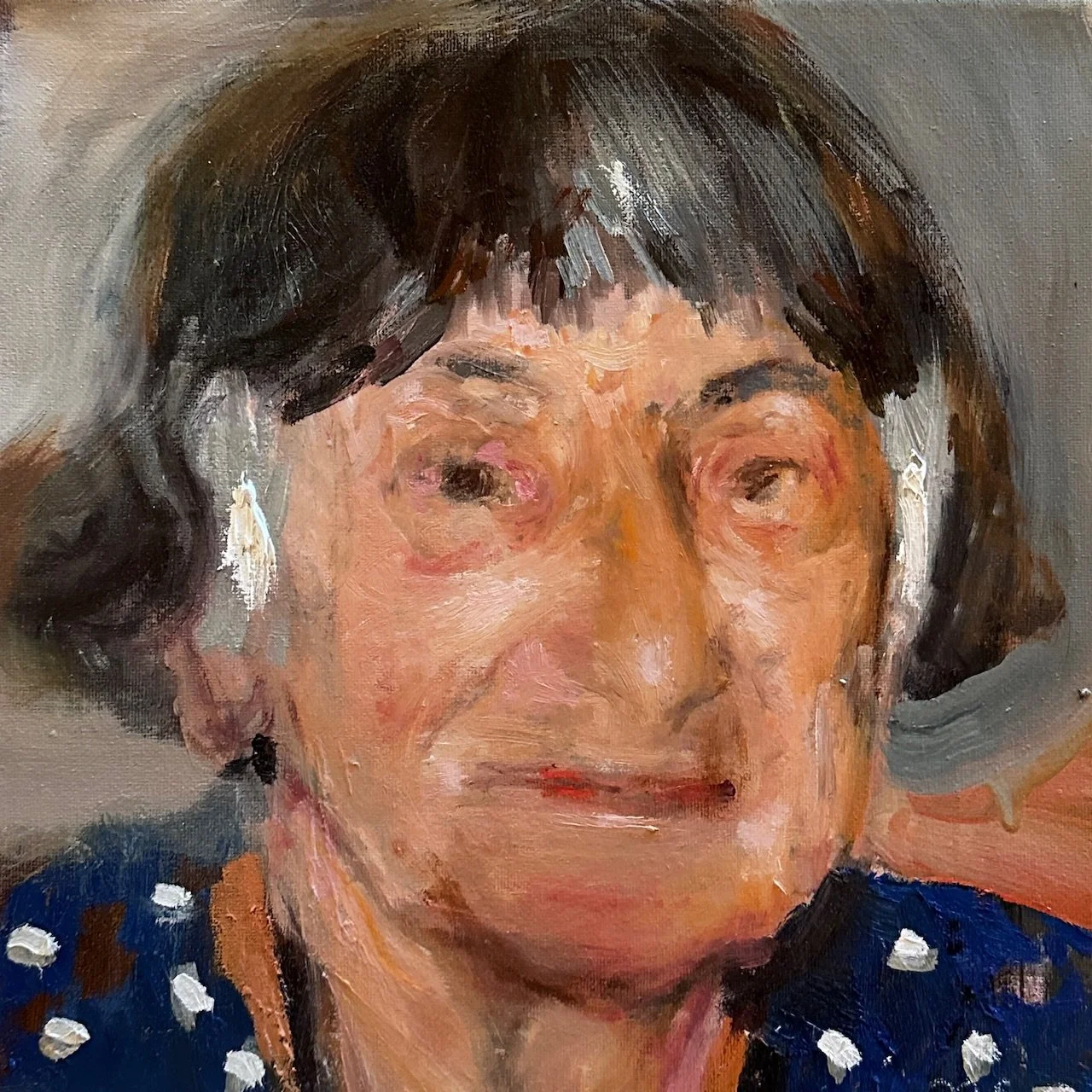
Susan Weil, artist | Noah Saterstrom
Painting, Research, and History
Saterstrom's practice occupies a space between artist and historian.
Research is not separate from the creative process but becomes part of it. Genealogical records, photographs, archival documents, and oral histories all contribute to the development of a painting.
Yet the finished works never become illustrations of research.
Instead, they remain works of art first, allowing emotion, atmosphere, and visual experience to communicate what documents alone cannot.
This combination of rigorous investigation and painterly sensitivity has become one of the defining characteristics of his practice.
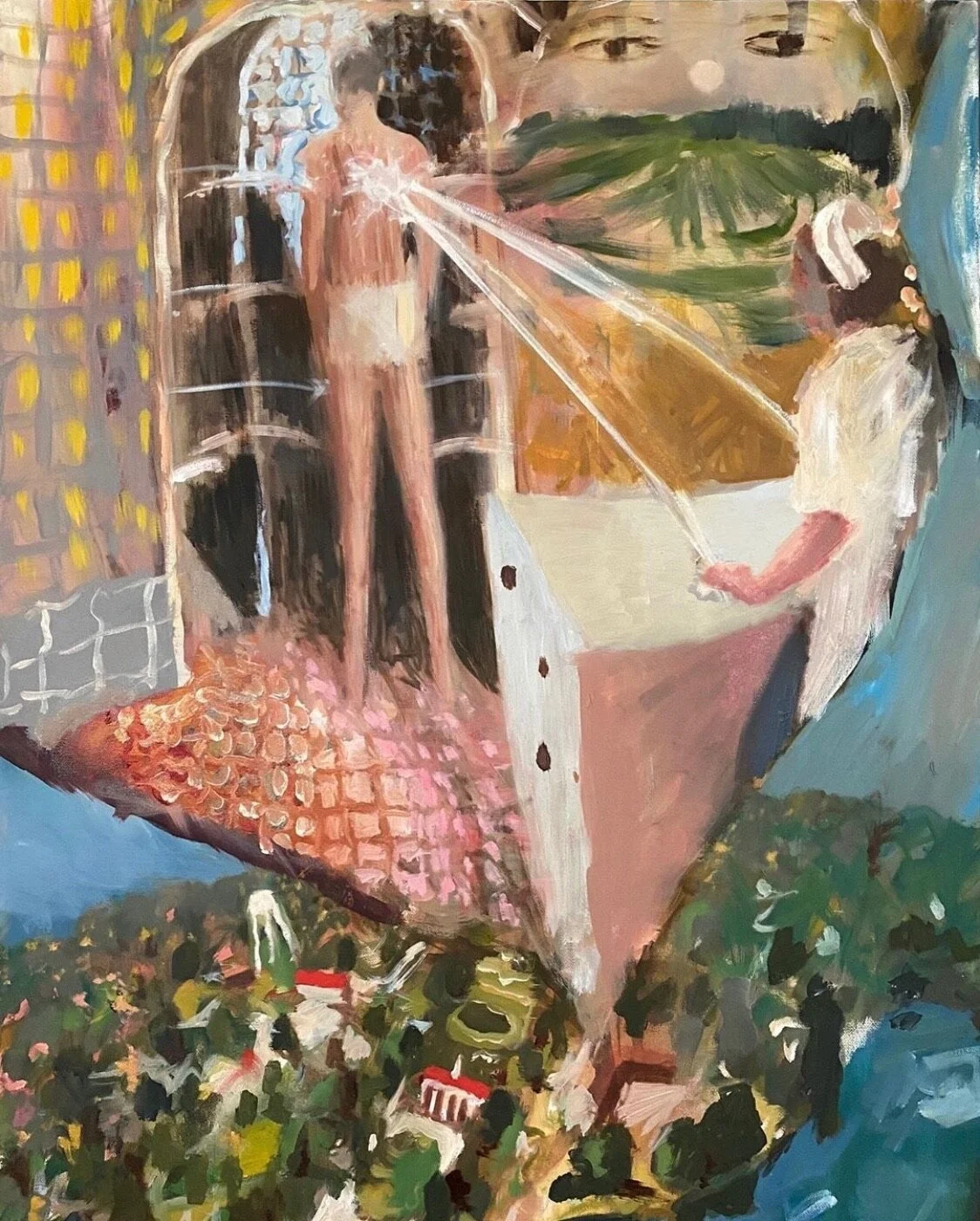
Whitfield | Noah Saterstrom
Why Noah Saterstrom Matters
Many artists preserve beauty.
Noah Saterstrom preserves memory.
His paintings remind us that history is not composed only of famous people or monumental events. It is equally built from ordinary lives, family photographs, forgotten letters, and stories passed quietly from one generation to the next.
In recovering these overlooked histories, Saterstrom demonstrates that painting can serve not only as an act of observation, but as an act of care.
His work asks us to remember.
And in remembering, to better understand ourselves.