
Andrés Conde
Cuban American Pop Realist Painter

Andrés Conde at the home of friends and collectors in Maryland, 2020.
Born in Havana in 1968, Andrés Conde's work is shaped by a life lived across cultures and continents. After leaving Cuba as a child, he spent formative years in Spain, New York, and Miami before eventually settling in Mississippi. These experiences inform a body of work that moves fluidly between personal memory, historical reflection, and contemporary realism.
Conde first gained recognition for politically charged works addressing Cuba's revolutionary history and its consequences. While the visual language of the work has evolved over time, the underlying concerns remain remarkably consistent: memory, displacement, resilience, and the enduring impact of political ideology on individual lives.
Today, Conde is best known for two interconnected subjects: the SOCIAL series and his psychologically charged portrayals of women.

The SOCIAL series revisits Cuba's celebrated SOCIAL magazine, which published from 1916 to 1938. Conde imaginatively reopens the publication in 1939, creating a new sequence of covers that continues until 1959, the year of the Cuban Revolution. Through these paintings, he preserves and reexamines a chapter of Cuban cultural history that was interrupted by political upheaval. The series is neither fantasy nor simple nostalgia. It is an act of historical memory, a reminder that another Cuba once existed.
Women occupy an equally important place in Conde's work. His subjects are not passive muses or decorative figures. They are resilient, self-possessed, and psychologically complex. Their gaze often serves as the emotional center of the painting, revealing strength, vulnerability, defiance, tenderness, and perseverance in equal measure.
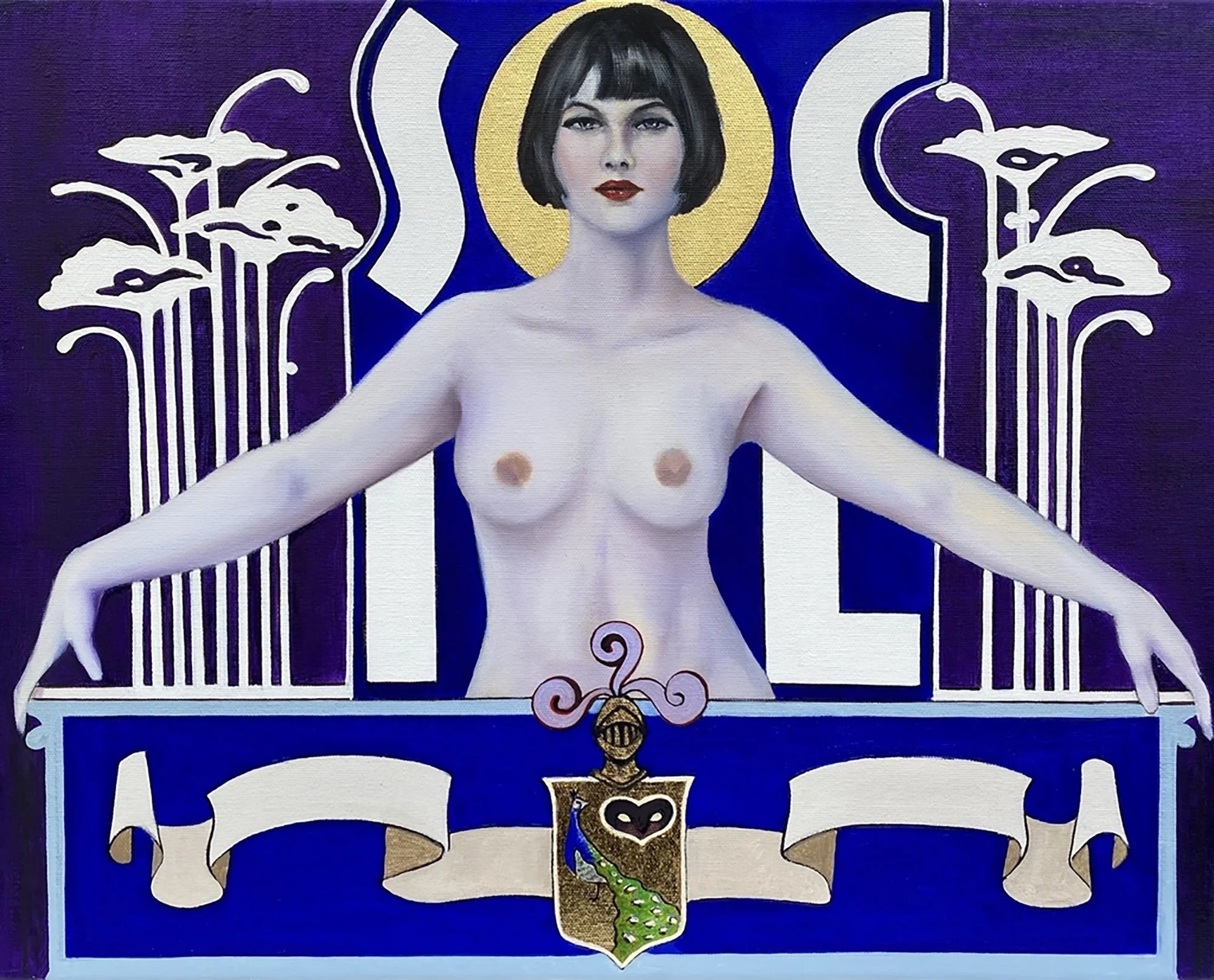
Drawing from traditions of commercial illustration, pop realism, and classical portraiture, Conde creates paintings that are immediately accessible yet layered with meaning. The beauty of the work is not separate from its deeper concerns. Rather, beauty becomes the vehicle through which history, memory, and human experience are explored.
Whether depicting a woman confronting the viewer with unwavering confidence or reconstructing fragments of a vanished Havana, Conde's paintings invite us to look beyond appearances. Beneath the surface lies a deeper conversation about culture, loss, resilience, and what it means to remain fully human in the face of change.