
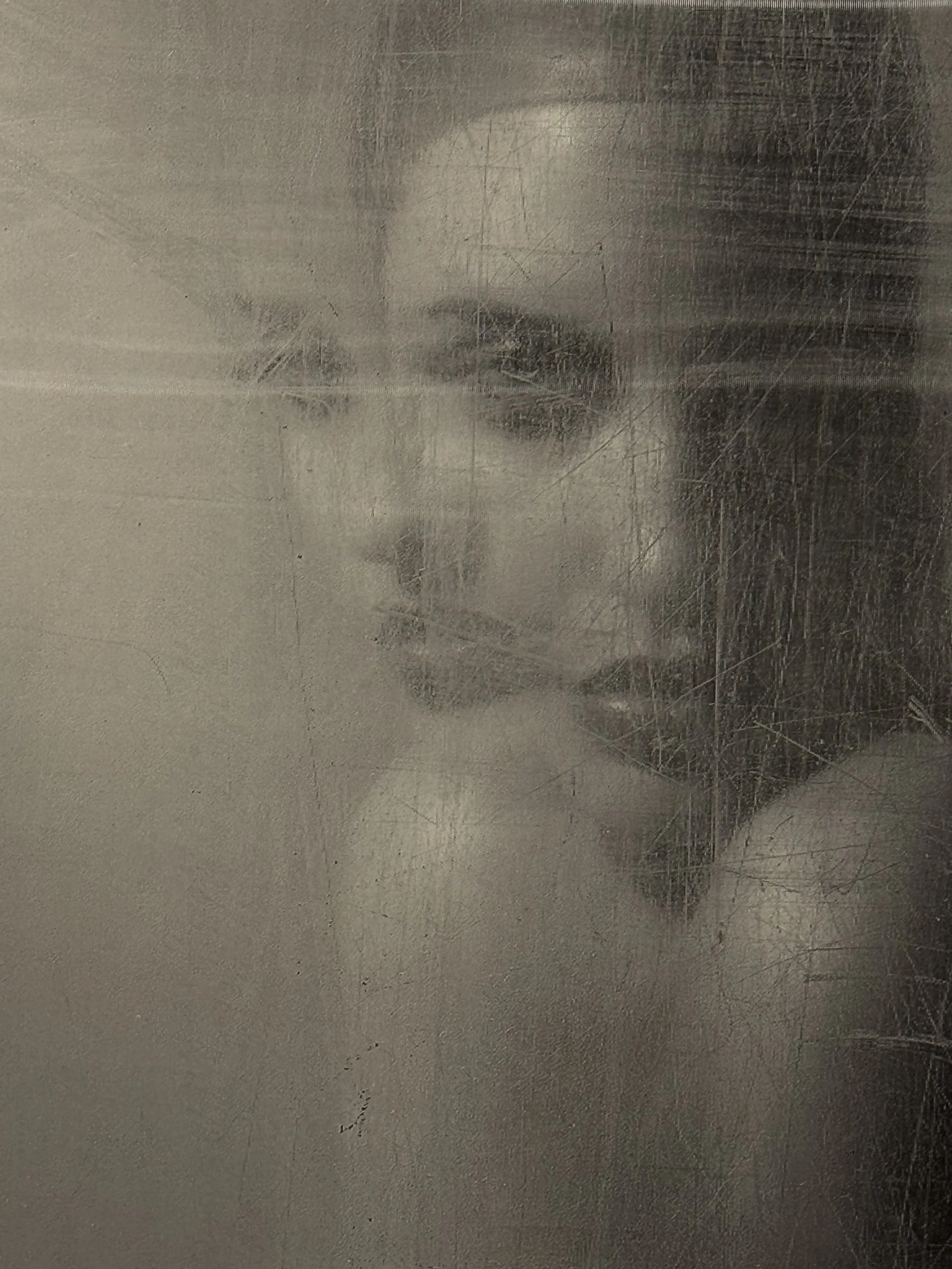
Conde Contemporary at Chicago Art Fair, 2026
Conde Contemporary heads to Chicago for the inaugural Chicago Art Fair at THE MART, presenting new and recent works by Andrés Conde, Natasha Kertes, Kevin Sloan and Pablo Santibáñez Servat. Join us October 7–10 in Booth 3072.
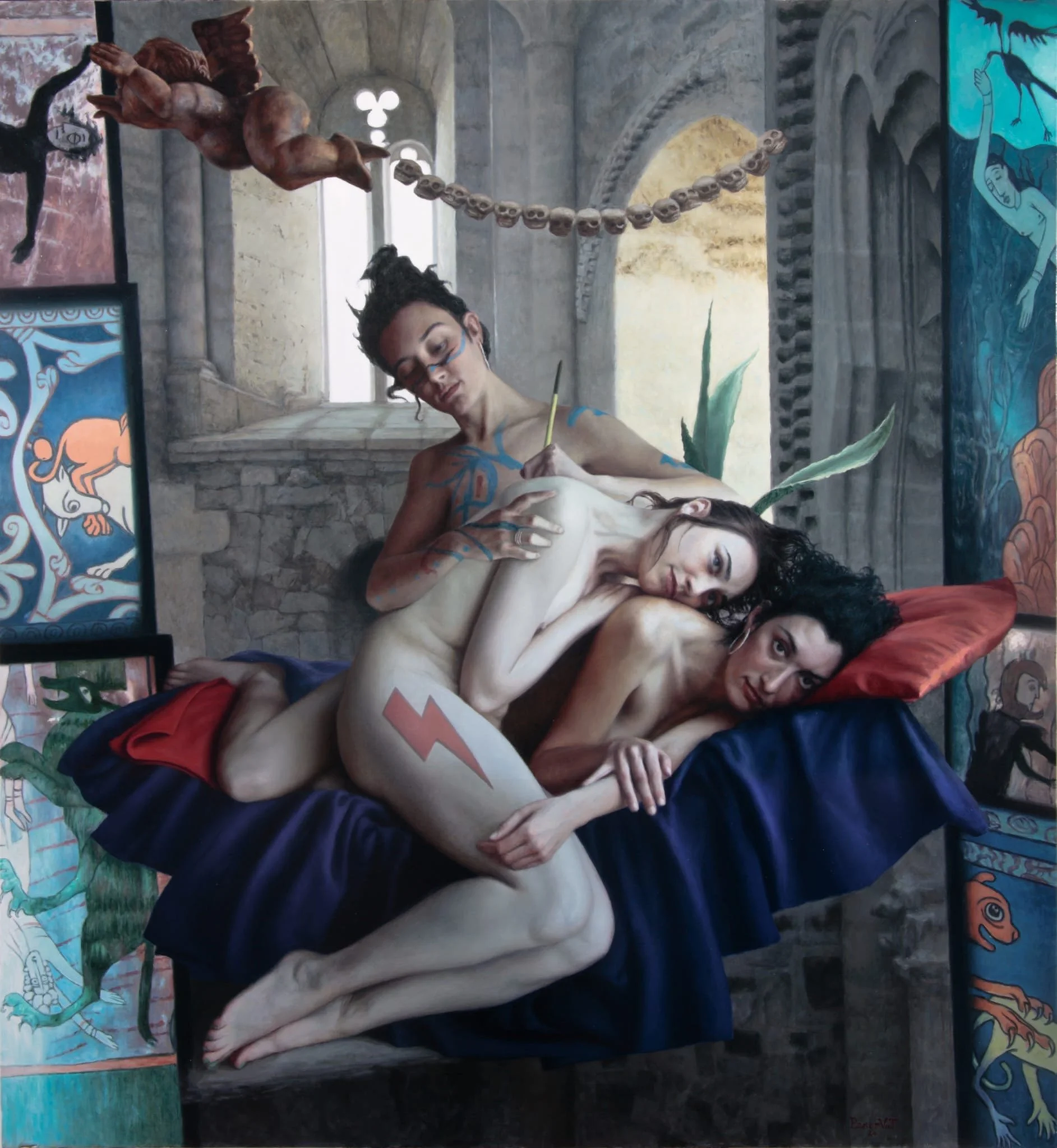
Who Is Pablo Santibáñez Servat?
Pablo Santibáñez Servat is a Chilean-born contemporary painter whose richly symbolic works explore history, mythology, religion, cultural identity, and the enduring exchange of ideas between civilizations. Combining Old Master techniques with magical realism, he creates paintings that invite viewers to explore the deeper stories shaping human experience.

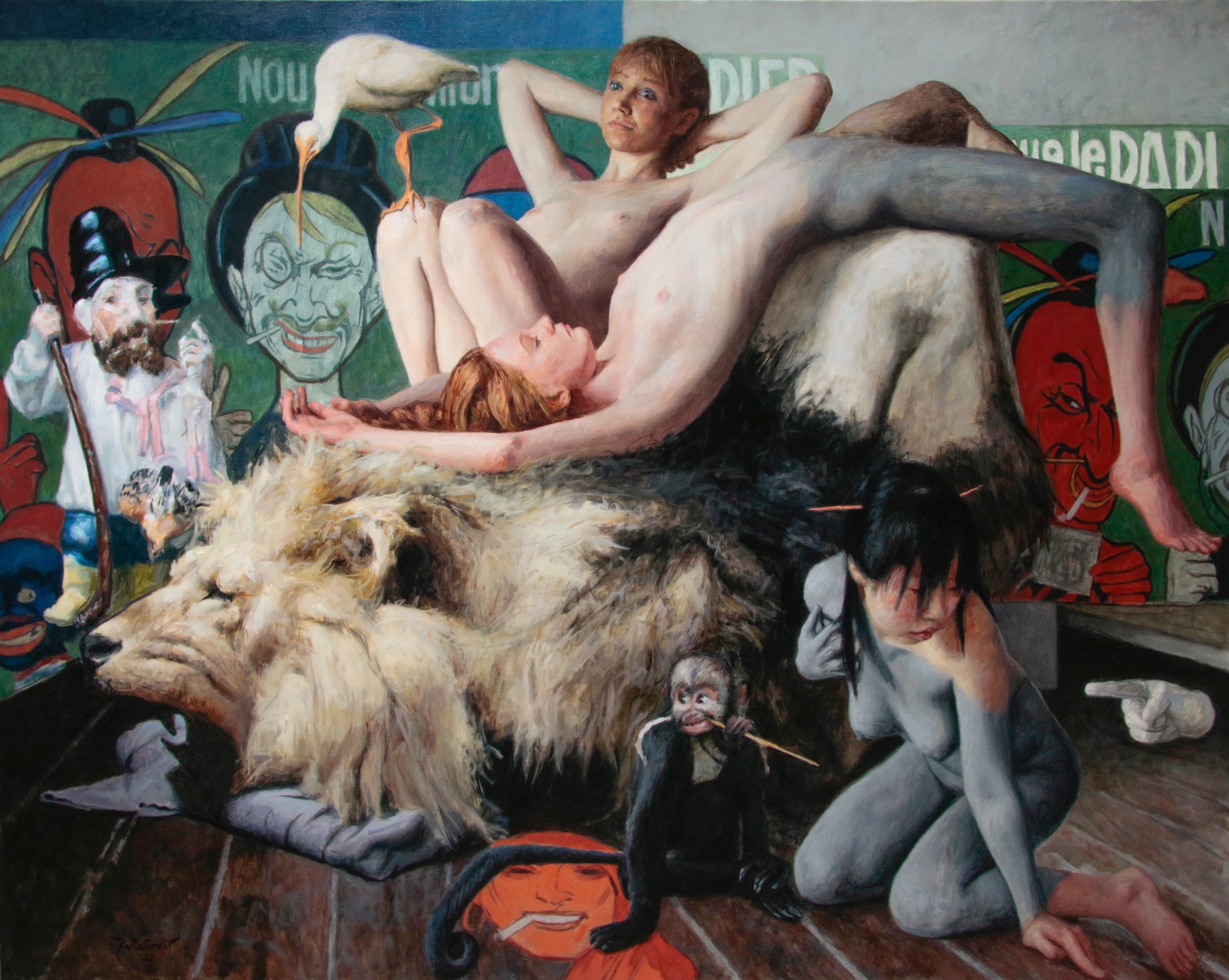
Are You Offended?
In this conversation, artist Pablo Santibáñez Servat discusses history, race, identity, symbolism, and the role of commercial illustration in shaping cultural memory, using his provocative painting Circus III as a lens through which to examine the complexities of the human experience.
Three From Chile
These three South American artists, Pablo Santibáñez Servat, Giovanni Gellona, and Antonio Cavagnaro, possess great technical skill and fertile imaginations. They are each deeply rooted in symbology and cultural iconography which crosses ethnological divisions. All three manage to maintain a graceful sense of aesthetic values while communicating an often blood soaked narrative. They are, individually, an incredibly rare find, unicorns even, and I am incredibly grateful to work them.

Images From Midnight in The Garden of Good and Evil
The title “Midnight in The Garden of Good and Evil” has been one I’ve always found profoundly evocative and imaginative, it asks you to consider what that place and time might look and feel like. Our exhibition, of the same name, was simply my interpretation of that glorious title.

An Amalgamation of The Americas : Santibáñez Servat
The work of Pablo Santibáñez Servat is a magical synthesis of occidental and indigenous visuals intrinsic to the Americas. He often weaves ancient symbols with contemporary images as though no time has lapsed; he creates his own symbolic language, which seems to deny the very concept of time or at least the beginning and ending of eras, suggesting instead the coexistence of epochs or congruence of time.