
Who Is Pablo Santibáñez Servat?
Pablo Santibáñez Servat is a Chilean-born contemporary painter living and working in Spain. Known for combining classical painting techniques with symbolism, mythology, religion, history, and magical realism, he creates richly layered works that explore culture, identity, and the forces that shape human civilization.
To understand Pablo Santibáñez Servat, it helps to think less about painting and more about exploration.
Not the exploration of geography, but of culture, history, mythology, religion, and the ideas that have shaped human societies across centuries and continents.
Born in Chile and now based in Spain, Santibáñez occupies a unique position between worlds. He is both European and Indigenous, a product of histories that are often presented as opposing forces but which, in reality, have become deeply intertwined. Rather than approaching these inheritances through resentment or nostalgia, he approaches them with curiosity, nuance, and a desire for understanding. His paintings are not arguments. They are investigations.
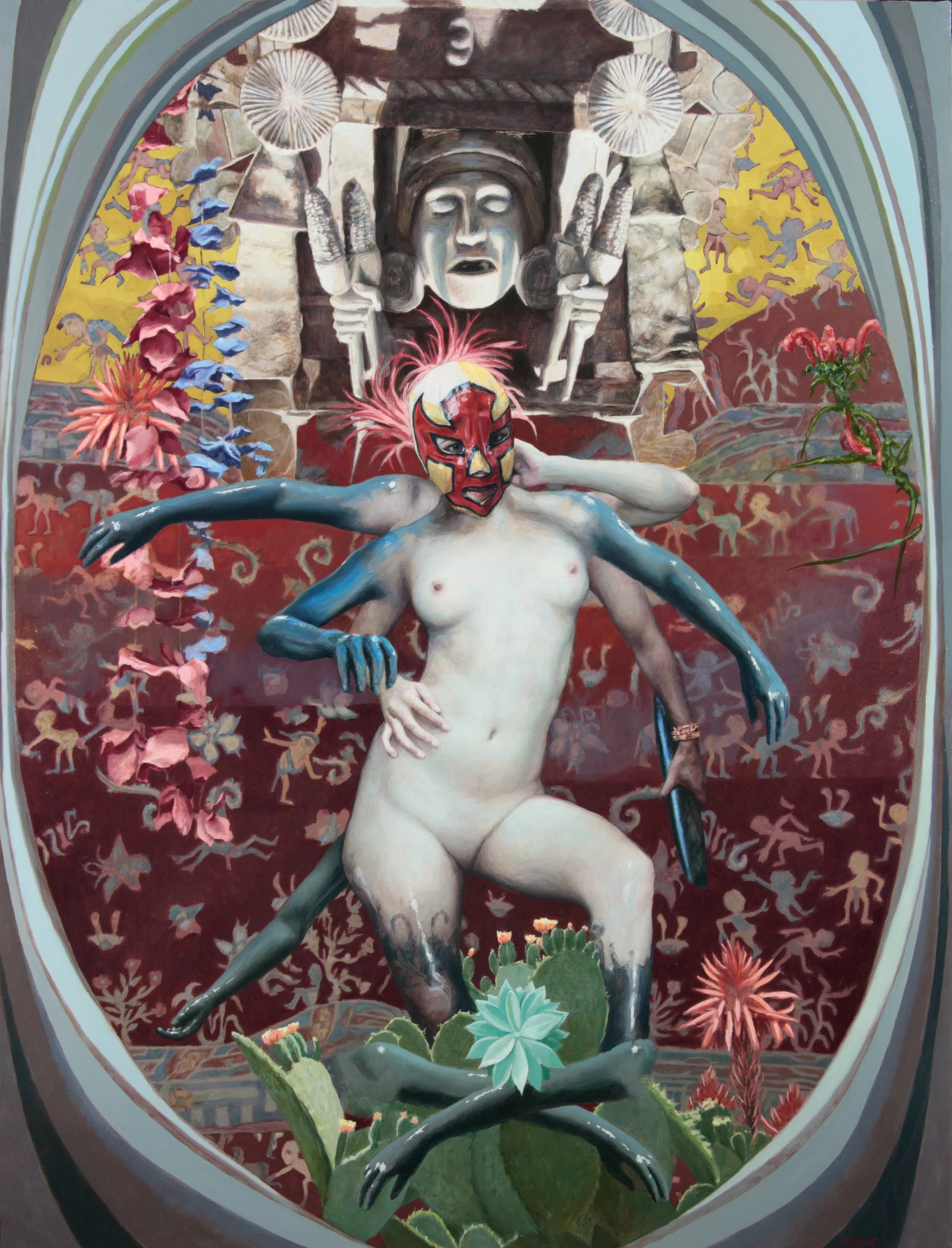
Tlalocan Goddess | Pablo Santibáñez Servat
Through them, Santibáñez explores the relationships between faith and doubt, myth and history, memory and identity, conquest and creation. His work examines how cultures encounter one another, influence one another, and ultimately create something new.
Few contemporary artists draw from such a broad range of influences. The worlds that inhabit his paintings are populated by conquistadors and saints, Indigenous symbols and classical mythology, religious iconography and esoteric traditions. References to European art history exist comfortably alongside the visual languages of the Americas. Ancient ideas converse with contemporary concerns.
Yet these paintings are never nostalgic. Nor are they political in any simplistic sense.
Santibáñez is interested in the larger story of humanity: how cultures meet, collide, transform one another, and continue to evolve. His work recognizes both the triumphs and tragedies of history while refusing to reduce human experience to either. Rather than approaching history through condemnation or romanticism, he approaches it through inquiry. His paintings acknowledge conflict, loss, adaptation, and cultural transformation while also recognizing the creativity, resilience, and exchange that emerge when civilizations encounter one another.
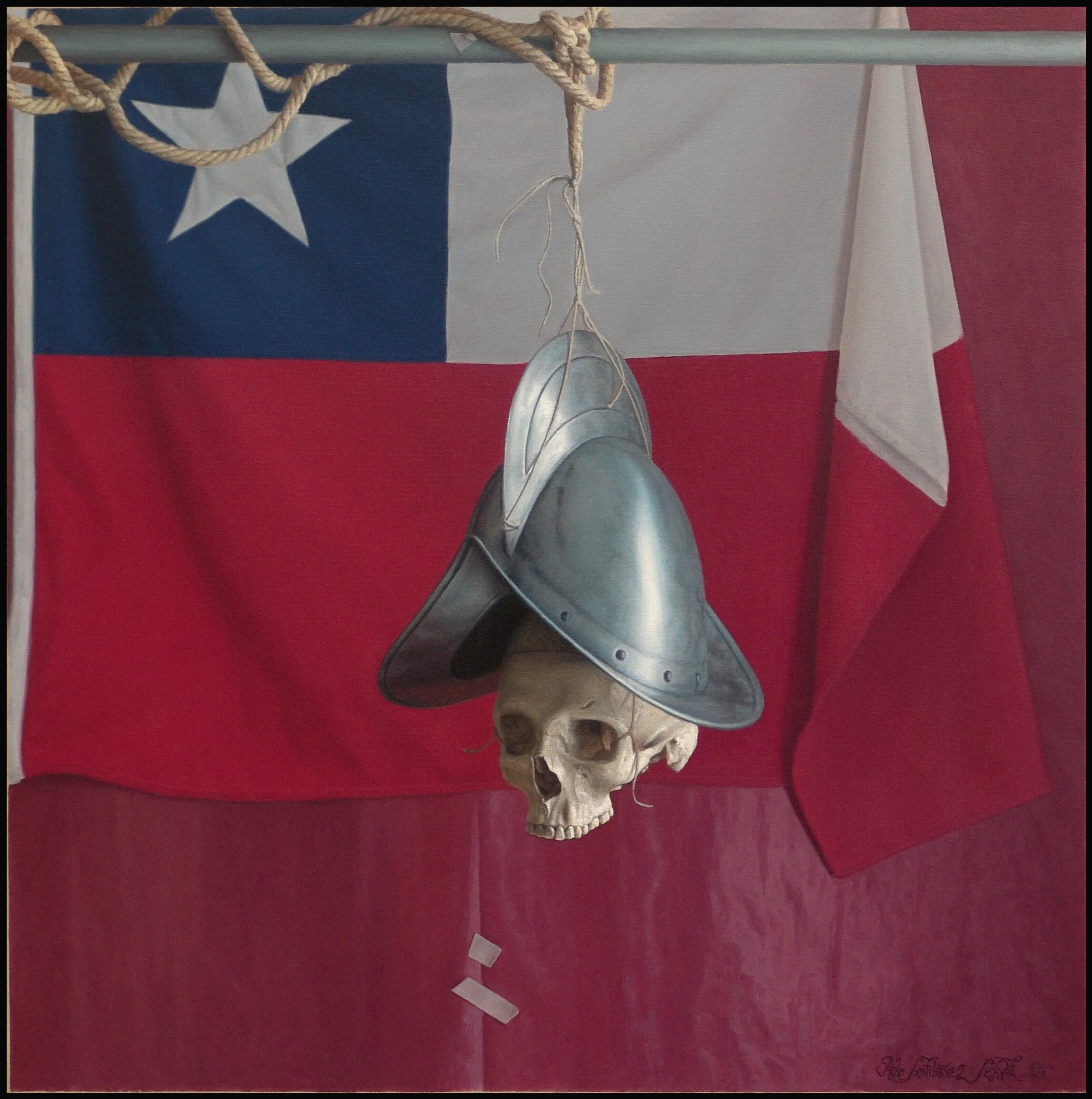
El Dorado No Estaba en Chile (The Gold Wasn’t in Chile) | Pablo Santibáñez Servat
He is frequently associated with magical realism, though the term only partially captures the depth of his work. Like the great writers and artists of that tradition, Santibáñez understands that reality extends beyond what can be measured or explained. Symbolism, mythology, religion, folklore, alchemy, and esoteric traditions all play important roles within his visual language.
Animals become messengers. Objects become symbols. Historical figures become archetypes. The visible world becomes a doorway into larger questions about existence, belief, transformation, and meaning. For Santibáñez, the metaphysical is not separate from reality. It is part of reality.
One cannot discuss Pablo Santibáñez Servat without discussing painting itself. Among the artists represented by Conde Contemporary, he is perhaps the most deeply rooted in the traditions of classical painting. His work demonstrates a profound understanding of the techniques developed by generations of European masters, not as historical curiosities, but as living tools capable of expressing contemporary ideas.
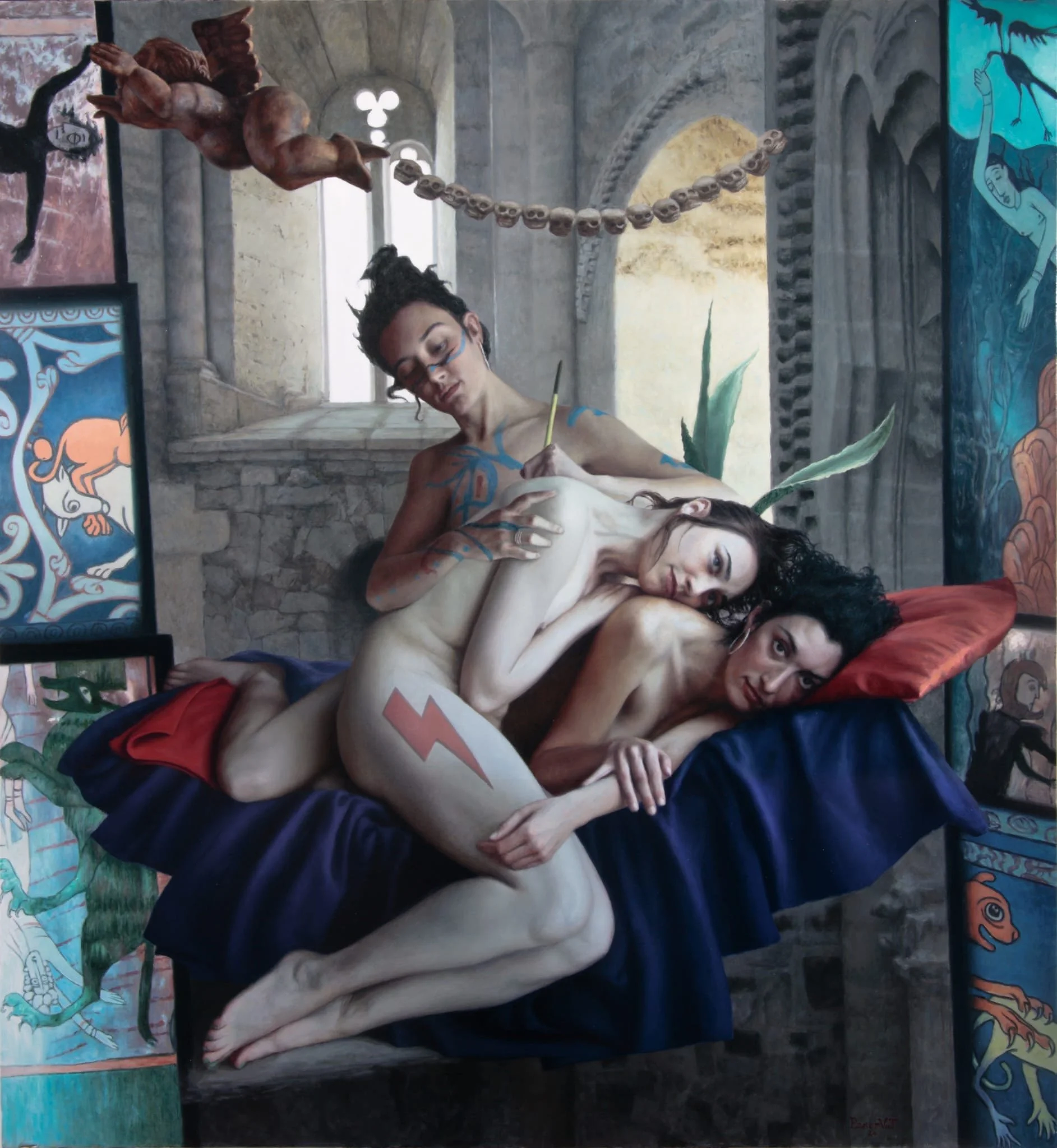
Scriptorium 2 | Pablo Santibáñez Servat
Working in successive layers of oil paint thinned with linseed oil, Santibáñez builds luminous surfaces that seem to generate light from within. His paintings reward patience. Viewed closely, one sees remarkable technical precision. Viewed from a distance, the image comes fully alive. Light emerges. Atmosphere develops. The painting breathes.
Collectors are often drawn to Santibáñez's work because it operates on multiple levels simultaneously. The paintings can be appreciated for their technical brilliance alone. They can be enjoyed as visual narratives rich with symbolism and historical references. They can also be approached philosophically, as meditations on identity, culture, spirituality, and the human condition.
Each viewing reveals something new. A hidden symbol. A historical reference. A visual echo from another culture or era. The paintings unfold gradually, rewarding curiosity and sustained attention.
At a time when much contemporary art focuses on fragmentation, Pablo Santibáñez Servat is engaged in synthesis. He explores connections rather than divisions. He searches for continuity across centuries of human experience. He recognizes complexity without abandoning beauty, and history without losing sight of imagination.
His paintings remind us that civilization itself is an ongoing conversation, shaped by countless encounters between people, beliefs, traditions, and ideas. Like all great explorers, Santibáñez is not searching for simple answers. He is searching for deeper understanding.
And through his paintings, he invites us to join the journey.