
Emotional Architecture
How art, beauty, memory, and intentional design shape the emotional experience of daily life.
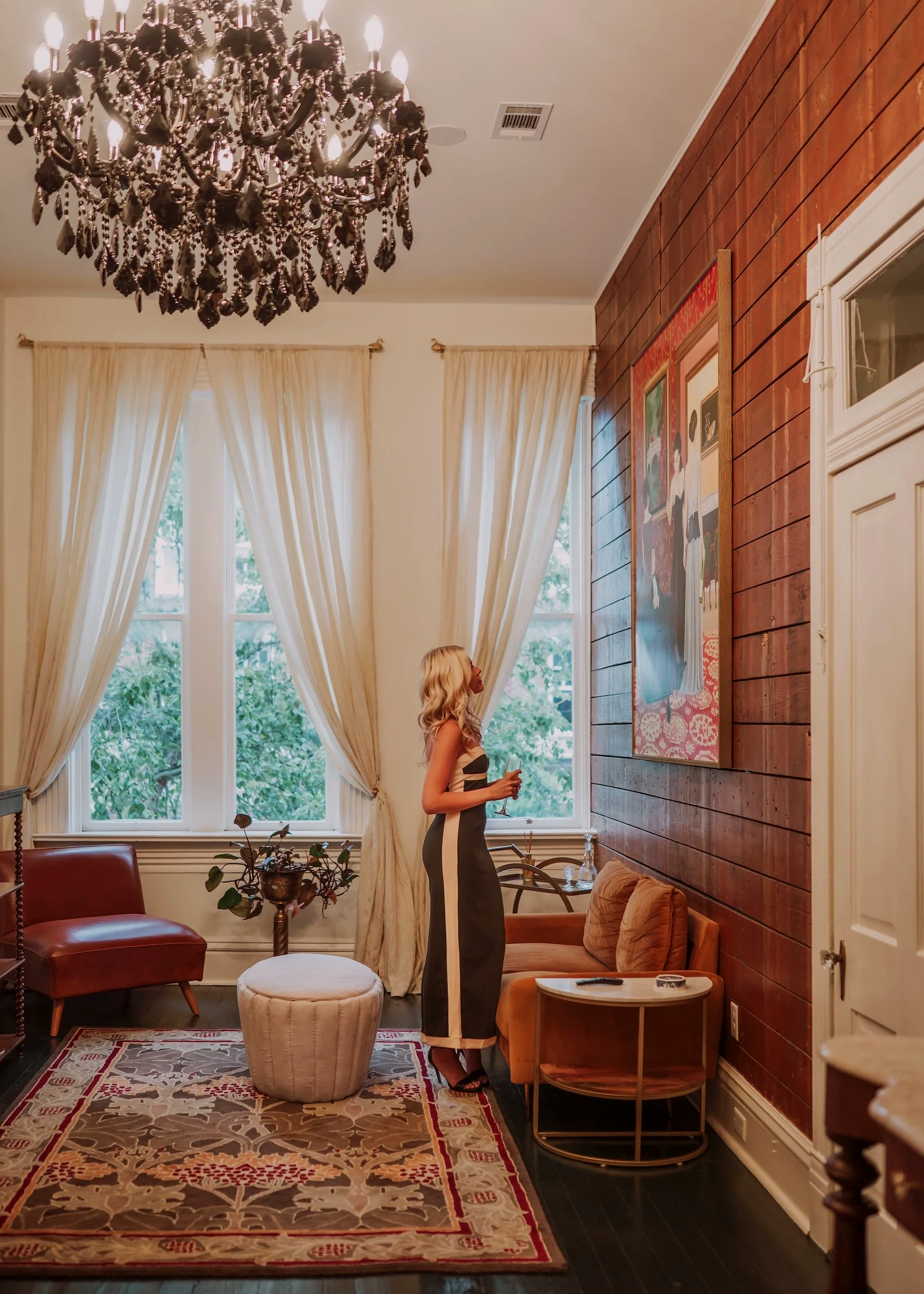
Natchez Gallery Suites | Painting by Andrés Conde
Photo Credit Allen Laird
I am, by nature, overstimulated.
The world provides plenty of noise without my help. News cycles, deadlines, social media, traffic, notifications, obligations, and the endless stream of information competing for our attention. By the time I walk through my front door, I rarely need more stimulation. In fact, I need less.
Over the years I've consciously created my own home, and interiors, that serve as a refuge from the outside world. There are always of books. A comfortable chair where one can read. Artwork by artists, photographers, and sculptors I admire. Herbs drying from the garden. Blankets draped over the sofa near the fireplace. Soft lighting. Objects collected over time that carry memories, stories, and meaning.
Nothing is accidental.
Every choice contributes to how the space feels.
The goal is simple: calm.
Someone else might curate a very different environment. They may thrive on energy, color, activity, and visual complexity. Their walls might be filled with vibrant paintings, bold patterns, and objects that stimulate conversation and excitement. Neither approach is right or wrong.
The point is not the style.
The point is the intention.
We spend enormous amounts of time thinking about what we put into our bodies and comparatively little time considering what we put into our environments. Yet our surroundings influence us constantly. Environmental psychologists have long understood that physical spaces affect mood, stress levels, behavior, and overall wellbeing. More recent research suggests that meaningful encounters with art can improve quality of life, reduce stress, and contribute to emotional wellbeing.
Most of us don't need a study to tell us this.
We already know.
We know how it feels to walk into a cluttered room and immediately feel anxious. We know the sensation of entering a beautiful space and exhaling without realizing we've been holding our breath. We know the difference between a room that drains us and one that restores us.
Art plays a particularly important role in this equation.
The art we choose to live with becomes part of the emotional landscape of our lives. Unlike a museum visit, where we spend a few moments with a work before moving on, living with art creates an ongoing relationship. A painting seen every morning over coffee becomes part of a daily ritual. A photograph hanging in a hallway quietly accompanies years of conversations, celebrations, and ordinary moments.
The work becomes woven into the fabric of our lives.
This is one reason I have always found the distinction between "serious" collecting and "decorative" collecting somewhat artificial. The art world has often looked down on those who buy work because it complements their home. I understand the criticism, but I also think it misses something important.
Our homes matter.
The environments we create influence how we feel, think, rest, and connect with the people around us. If a particular painting creates a sense of peace, joy, wonder, nostalgia, or inspiration, why should that be dismissed as merely decorative?
The desire to create a beautiful home is not superficial.
It is deeply human.
The best collectors understand this instinctively. They are not simply acquiring objects. They are curating an experience. They are shaping the emotional atmosphere in which their lives unfold.
Every object contributes something.
A painting. A lamp. A bookshelf. A chair positioned beside a window. A favorite mug used every morning. A quilt passed down through generations. Individually they may seem insignificant. Together they tell a story about what matters to us.
In this sense, collecting is not only about ownership.
It is about authorship.
We are writing the emotional story of our homes.
The artwork on our walls, the books on our shelves, the objects we choose to keep, and the spaces we create for ourselves all become part of that narrative. Over time they shape not only how our homes look, but how they feel.
And how they feel ultimately shapes how we live.
Essay by Stacy Conde