
Who Is Wanda Fraga Sánchez de la Campa?
Few contemporary artists move as fluidly between the personal and the political as Wanda Fraga Sánchez de la Campa.
Born in Santa Clara, Cuba, and now based in Guatemala, Fraga is a multidisciplinary artist whose work encompasses painting, collage, photography, and writing. Across these mediums, she explores identity, human relationships, power, belonging, and the often complicated forces that shape individual experience.
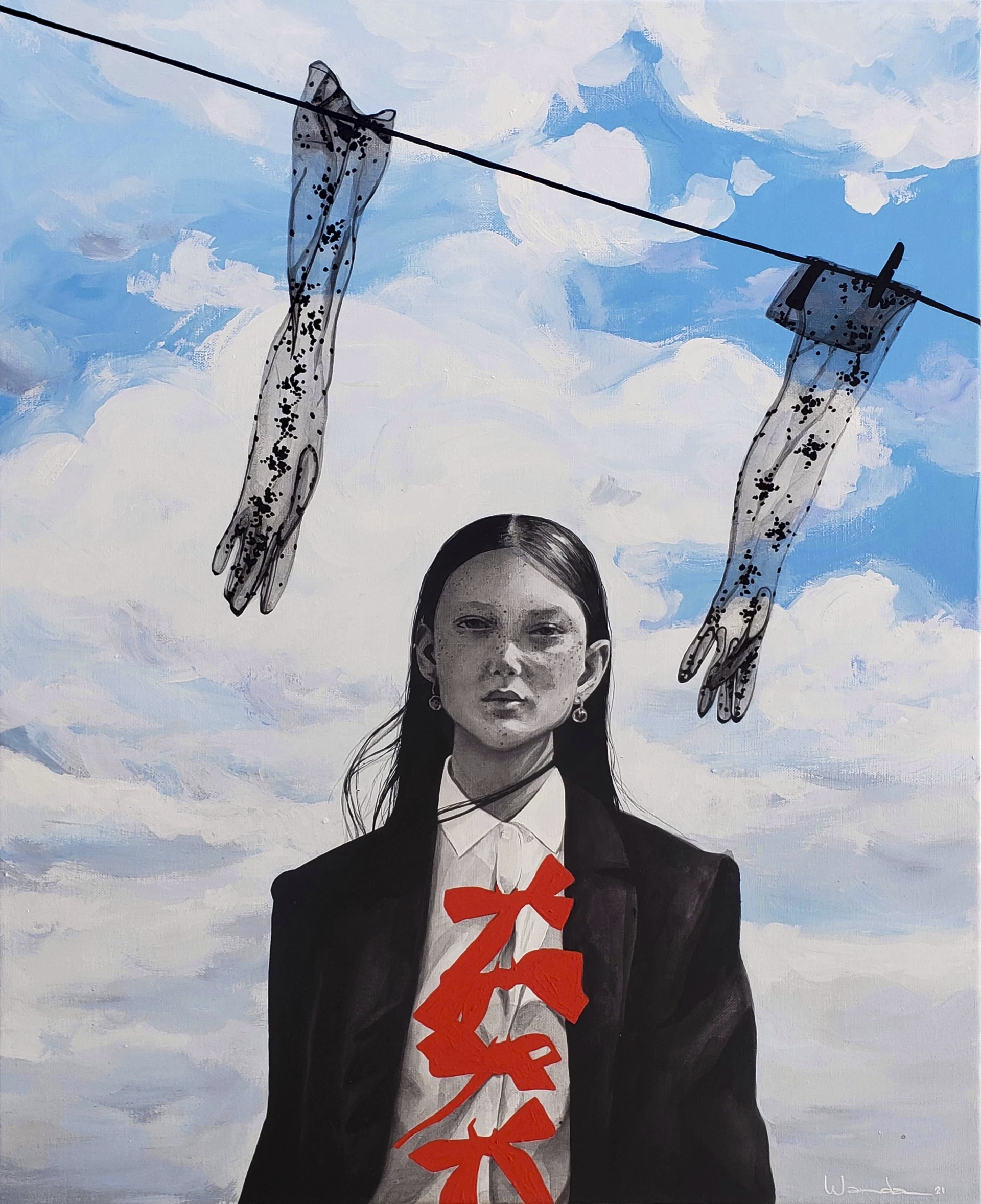
The Sound of Silence | Wanda Fraga Sánchez de la Campa
At the center of her practice is a fascination with the construction of identity itself. Her works examine the stories, symbols, memories, ideologies, and emotional inheritances that influence how we understand ourselves and our place in the world.
Fraga's artistic development began in childhood, where solitude became both a refuge and a catalyst for creative expression. Painting provided a means of navigating an inner landscape that would later become a recurring subject throughout her work. After studying at the Leopoldo Romañach Art Academy in Santa Clara, she developed a visual language informed by conceptual art, symbolism, postmodern theory, and autobiography.
Her early work frequently employed collage and mixed media, a medium that remains central to her practice today. For Fraga, collage offers immediacy. Ideas can be assembled, deconstructed, and reconstructed with a speed that mirrors thought itself. The medium allows her to respond quickly to personal experiences, social realities, and evolving questions.
As her practice matured, Fraga's attention expanded beyond personal narratives toward broader social and political concerns. Living and working in Cuba during a period of increasing disillusionment, she began examining the relationship between ideology and individual experience. Rather than presenting fixed answers, her work explored the tensions between collective narratives and private realities, between official histories and lived experience.
Yet to describe Wanda Fraga Sánchez de la Campa primarily as a political artist would miss the larger concerns that unite her work.
The throughline is not politics, but identity under pressure—whether that pressure comes from society, ideology, family, memory, or the self. Across paintings, collages, photographs, and written works, Fraga returns repeatedly to questions of how identity is formed, challenged, inherited, and transformed. Her work examines the forces that shape our understanding of who we are and how we navigate the world around us.
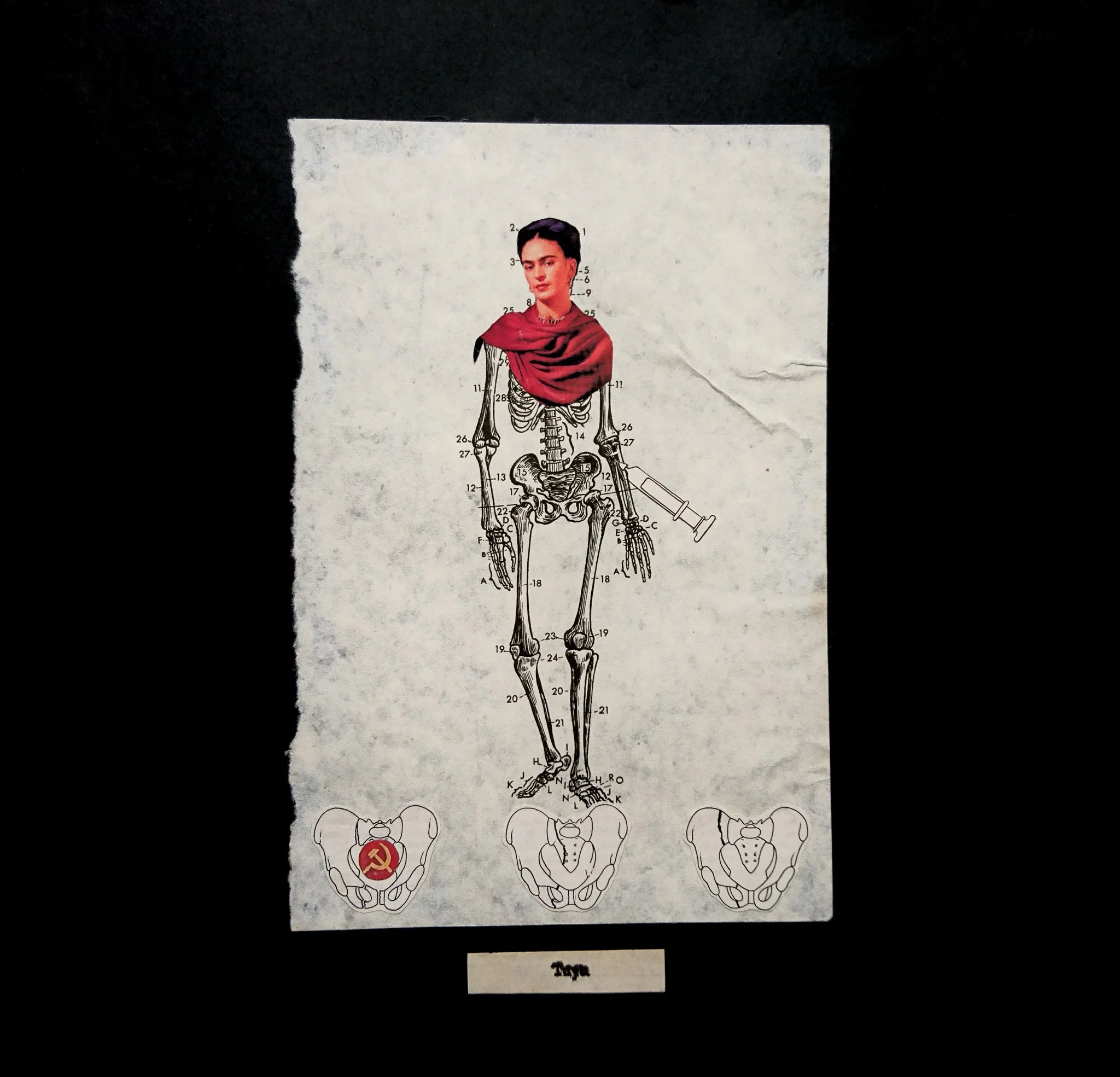
In works such as Tuya (Yours), Fraga combines anatomical imagery, cultural symbolism, references to art history, and political iconography to explore questions of ownership, belonging, power, and selfhood. The result is work that is simultaneously intimate and political, personal and universal.
Today, Fraga's practice continues to evolve across multiple mediums. Her paintings often inhabit dreamlike spaces populated by symbolic animals, fragmented figures, theatrical imagery, and archetypal characters. Her collages employ similar strategies, moving fluidly between autobiography, observation, and imagination.
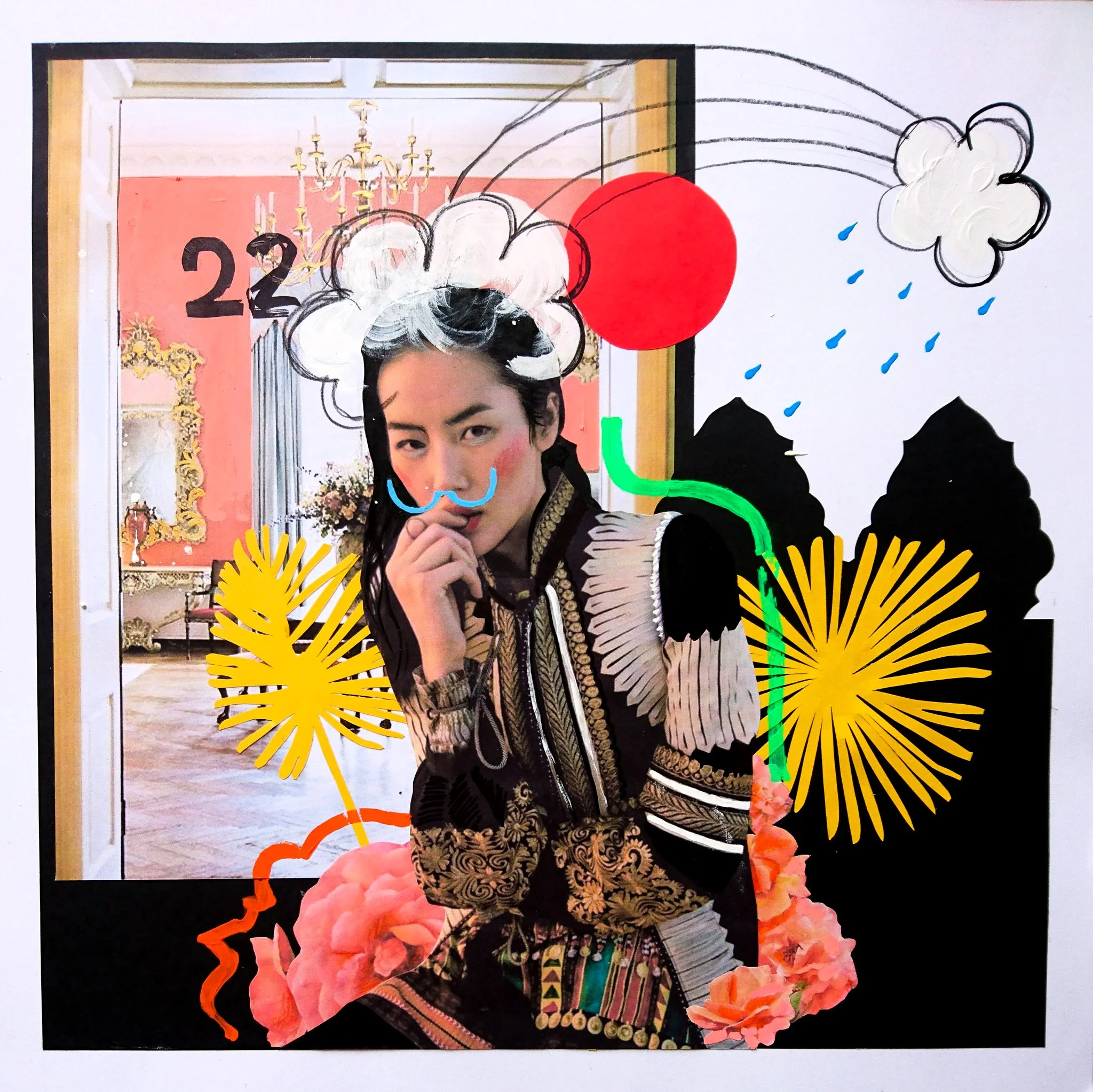
Hallucinations | Wanda Fraga Sánchez de la Campa
While her work frequently addresses themes of memory, absence, love, motherhood, partnership, and loss, these subjects are never presented in isolation. Instead, they become entry points into larger conversations about identity, belonging, and the stories through which we make sense of ourselves.
Through layered imagery and poetic visual narratives, Fraga invites viewers into a contemplative space where intimate experience becomes shared reflection. Her work examines the tension between connection and estrangement, certainty and ambiguity, memory and forgetting, life and death.
As Fraga writes:
"The artwork remains as both trace and testimony: a persistent affirmation of having been here."